Blog Details
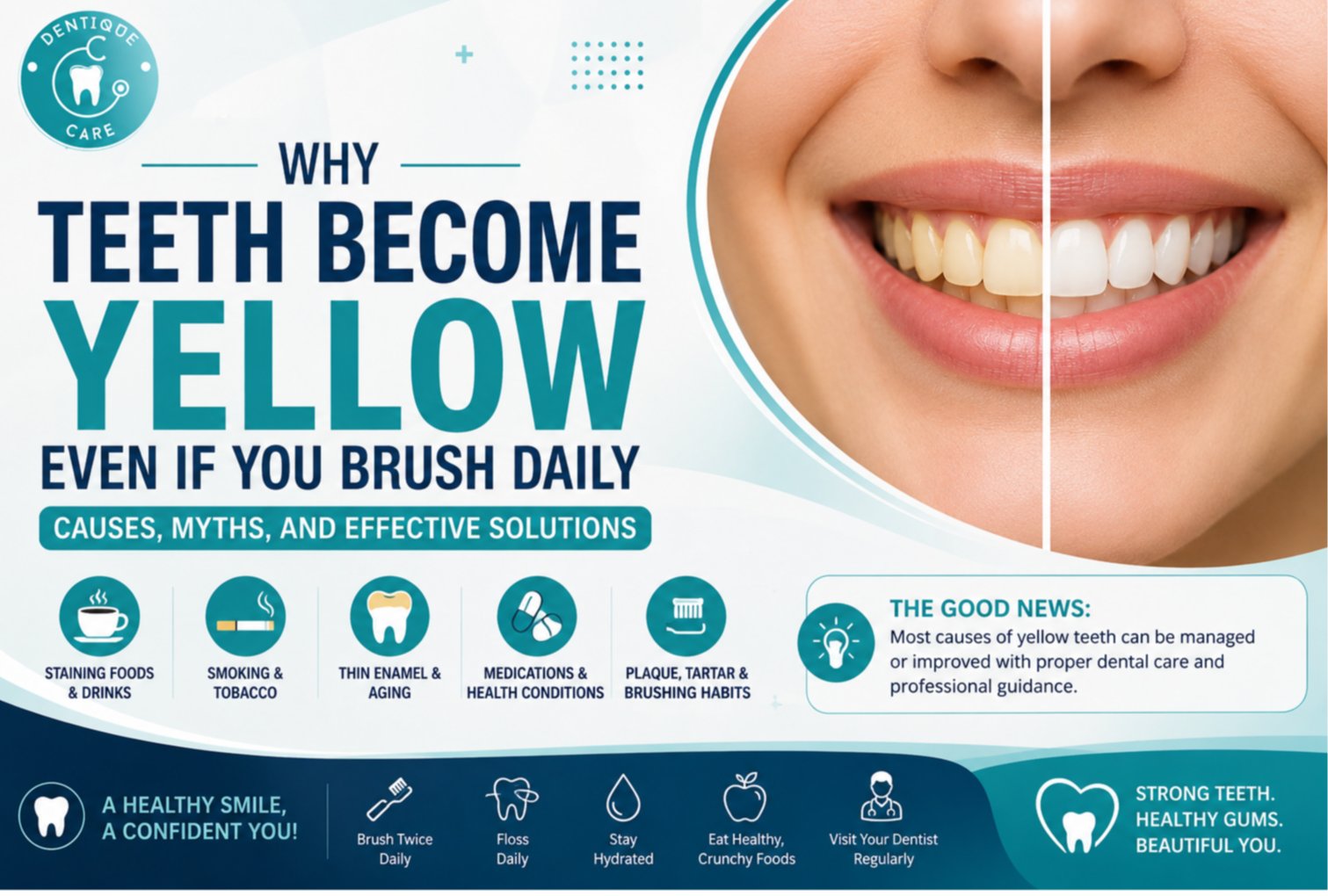
You brush your teeth twice a day, use a good toothpaste, and maintain proper oral hygiene—yet your teeth still appear yellow. If this sounds familiar, you're not alone. One of the most common questions dentists hear is:
"Why are my teeth yellow even though I brush every day?"
The truth is that brushing alone cannot prevent all types of tooth discoloration. The color of your teeth is influenced by several factors, including genetics, aging, diet, lifestyle habits, medications, and even the structure of your teeth.
While daily brushing is essential for maintaining oral health, it doesn't always guarantee perfectly white teeth. Understanding the real causes of yellow teeth can help you choose the right treatment and avoid ineffective solutions.
This comprehensive guide explains why teeth become yellow despite regular brushing and how you can achieve a brighter, healthier smile.
Your teeth may become yellow despite daily brushing because of:
In many cases, yellow teeth are completely normal and do not necessarily indicate poor oral hygiene.
To understand why teeth become yellow, it's important to know the structure of a tooth.
A tooth has two major layers:
The hard outer layer that appears white or slightly translucent.
The inner layer, which naturally has a yellowish color.
When enamel becomes thinner, more of the yellow dentin becomes visible, making teeth appear darker or more yellow.
As we age:
Even individuals with excellent oral hygiene often notice yellowing teeth as they get older.
Aging-related discoloration is completely normal and can often be improved with cosmetic treatments.
Some people naturally have:
Tooth color is strongly influenced by genetics. Two people with identical oral hygiene habits may have completely different tooth shades.
Genetic tooth color usually responds well to:
Many people brush every day but do not brush correctly.
Common mistakes include:
Poor brushing techniques allow plaque and stains to accumulate.
Dentists recommend:
Quality of brushing matters more than simply brushing frequently.
Plaque is a sticky film of bacteria that forms on teeth. If not removed properly, it hardens into tartar, which often appears:
Once tartar forms, brushing alone cannot remove it.
Routine dental visits help prevent tartar-related discoloration.
Certain foods contain pigments that attach to enamel. Common staining foods and beverages include:
Even healthy foods can contribute to tooth staining over time.
Tobacco products contain substances that easily stain teeth. Smoking can cause:
These stains often become deeply embedded in the enamel.
Stopping tobacco use significantly improves oral health and appearance.
Many toothpastes are designed primarily to:
They may not effectively remove deep stains or change natural tooth color. Whitening toothpastes usually remove only surface stains.
Consult your dentist regarding:
Enamel can become thinner because of:
When enamel becomes thin, the yellow dentin underneath becomes more visible.
Some medications may cause tooth discoloration, including:
Some medications also reduce saliva production, increasing the risk of staining.
Never stop medications without medical advice. Your dentist may recommend:
Too much fluoride during childhood can cause dental fluorosis. Signs include:
Fluorosis develops while teeth are still forming.
Treatment options may include:
Certain health conditions may contribute to yellow or discolored teeth. Examples include:
Some conditions weaken enamel and increase staining.
Treating the underlying condition often improves oral health and tooth appearance.
Grinding your teeth wears away enamel. As enamel becomes thinner:
Many people grind their teeth while sleeping and may not realize it.
Not always. Many people with excellent oral hygiene naturally have slightly yellow teeth.
Extremely white teeth do not necessarily indicate better oral health. Healthy teeth naturally have slight variations in color.
Aggressive brushing can actually damage enamel and make teeth appear more yellow over time.
Brush twice daily using fluoride toothpaste.
Floss removes plaque and food particles between teeth.
Water helps remove staining substances and bacteria.
Limit:
Professional cleanings remove stains that brushing cannot eliminate.
Foods like apples and carrots help naturally clean the teeth.
One of the most effective methods for removing stains.
Removes plaque and tartar buildup.
Used for severe discoloration.
Ideal for significant cosmetic concerns and long-term smile enhancement.
Consult your dentist if:
Early evaluation can identify underlying problems before they become more serious.
Because tooth color is influenced by genetics, aging, enamel thickness, diet, and other factors beyond brushing alone.
In many cases, yes. Professional cleaning and whitening treatments can significantly improve tooth color.
Coffee can cause stains over time, but professional treatments can usually remove or reduce them.
Not necessarily. Slightly yellow teeth can still be perfectly healthy.
Brushing your teeth every day is essential for maintaining good oral health, but it is not the only factor that determines tooth color.
Teeth can become yellow because of:
1. Natural aging
2. Genetics
3. Plaque and tartar buildup
4. Staining foods and drinks
5. Smoking
6. Thin enamel
7. Certain medications
8. Medical conditions
9. Fluorosis
10. Teeth grinding
The good news is that most causes of yellow teeth can be managed or improved with proper dental care and professional guidance.
A healthy smile isn't defined by perfectly white teeth. It's defined by strong teeth, healthy gums, and confidence in your oral health. If you're concerned about tooth discoloration, consult your dentist to determine the underlying cause and the best solution for your smile.